What Is the Difference Between Vacuum and Gas-Protected Continuous Casting?
Vacuum continuous casting and gas-protected continuous casting are two important technologies in modern metal processing. Both technologies help improve molten-metal quality, reduce oxidation and produce high-quality metal products. However, their working environments, equipment configurations, production costs and application ranges are different. Understanding these differences is essential when selecting a suitable Continuous Casting Production Line for industrial manufacturing.
A Gas-Protected Continuous Casting Line uses an inert gas atmosphere, such as argon or nitrogen, to protect molten metal from contact with oxygen. A Gas-Protected Continuous Casting Machine is designed to maintain a stable protective atmosphere during melting, pouring and solidification. An Inert Gas Protected Casting Machine can significantly reduce oxidation and improve casting consistency, making it suitable for High-Grade Alloy Casting.
By comparison, vacuum continuous casting operates under reduced atmospheric pressure. It removes much of the air and certain gases from the casting environment, helping reduce gas-related defects and improve metal purity. Both technologies can be integrated into a Continuous Casting Production Line, but the choice depends on alloy characteristics, product requirements and investment budgets.
1. What Is Vacuum Continuous Casting?
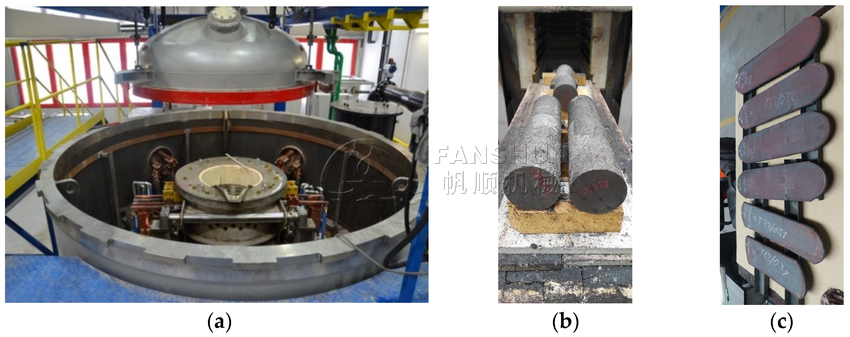
Vacuum continuous casting is a process in which molten metal is poured and solidified inside a controlled low-pressure environment. A vacuum chamber, vacuum pump system, sealing structure and temperature-control system are essential components.
This technology is particularly useful for materials that are sensitive to oxygen, hydrogen or other gases. During High-Grade Alloy Casting, vacuum conditions can help reduce gas absorption and improve the internal quality of the finished product.
A vacuum Continuous Casting Production Line generally includes a melting furnace, vacuum chamber, casting mould, cooling system, pulling mechanism and automatic control system. Depending on the alloy and production requirements, a Vacuum Continuous Casting Machine may also incorporate a vacuum induction melting furnace.
Unlike a Gas-Protected Continuous Casting Machine, vacuum equipment requires a sealed working chamber and a vacuum pumping system. This increases equipment complexity and initial investment.
2. What Is Gas-Protected Continuous Casting?
Gas-protected continuous casting uses an inert gas atmosphere to isolate molten metal from air. Argon is commonly selected because of its chemical stability, while nitrogen may be suitable for certain alloys and operating conditions.
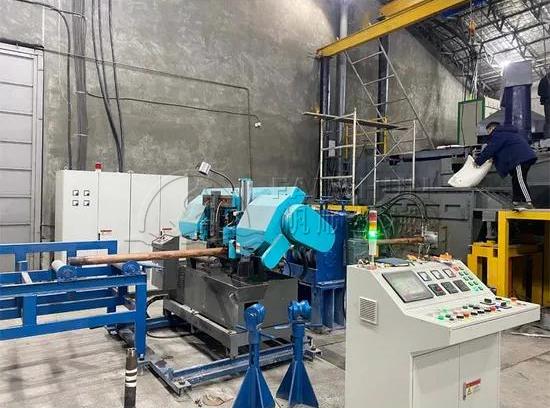
A Gas-Protected Continuous Casting Line typically consists of a melting furnace, protective gas supply, sealed or partially enclosed casting chamber, crystallizer, cooling system, pulling mechanism and electrical control cabinet.
The main purpose of a Gas-Protected Continuous Casting Machine is to reduce oxidation, prevent contamination and maintain stable casting conditions. An Inert Gas Protected Casting Machine is particularly useful when processing copper alloys, aluminum alloys and other non-ferrous metals that require controlled atmospheric protection.
For High-Grade Alloy Casting, the protective atmosphere helps maintain melt cleanliness and reduce surface oxidation. A properly configured Continuous Casting Production Line can also improve production stability and product consistency.
Compared with vacuum technology, a Gas-Protected Continuous Casting Line generally has a simpler chamber structure and lower equipment investment.
3. Main Differences Between Vacuum and Gas-Protected Casting
Although both methods aim to improve casting quality, their operating principles are fundamentally different.
Atmosphere control: A vacuum Continuous Casting Production Line removes air from the casting chamber, while a Gas-Protected Continuous Casting Line introduces inert gas to create a protective environment. A Gas-Protected Continuous Casting Machine relies on controlled gas flow rather than high vacuum.
Equipment configuration: Vacuum equipment requires a vacuum chamber, sealing components and vacuum pumps. An Inert Gas Protected Casting Machine mainly requires gas storage, pressure regulation, pipelines and an enclosed casting area. Consequently, a Gas-Protected Continuous Casting Line is generally easier to install and maintain.
Production costs: Vacuum systems normally involve higher initial investment and additional maintenance. A Gas-Protected Continuous Casting Machine can offer a more economical solution for manufacturers seeking stable High-Grade Alloy Casting without the expense of a complete vacuum system.
Casting quality: Vacuum technology is advantageous when dissolved gases and gas-related porosity are major concerns. Gas protection is effective in reducing oxidation and surface contamination. The appropriate Continuous Casting Production Line must therefore be selected according to the actual alloy composition and quality standards.
4. Which Materials Are Suitable for Each Technology?
Different metals have different requirements for atmospheric protection.
For copper and copper alloys, a Gas-Protected Continuous Casting Line can help reduce oxidation during melting and solidification. A Gas-Protected Continuous Casting Machine is suitable for applications involving copper rods, billets, strips and other continuous-cast products.
For aluminum alloys, an Inert Gas Protected Casting Machine can provide a controlled casting atmosphere. However, gas protection alone cannot remove all hydrogen dissolved in aluminum. Additional refining and degassing processes may be necessary.
For special alloys and materials with strict purity requirements, vacuum technology may provide additional advantages. High-Grade Alloy Casting often requires a combination of precise temperature control, suitable melting conditions and atmospheric protection.
A manufacturer selecting a Continuous Casting Production Line should consider material composition, casting temperature, production capacity and final product specifications.
5. Advantages of Gas-Protected Continuous Casting
A modern Gas-Protected Continuous Casting Line offers several practical advantages:
Reduced oxidation during melting and casting.
Improved surface quality and casting consistency.
Relatively simple equipment configuration.
Lower investment compared with many complete vacuum systems.
Flexible application across different non-ferrous alloys.
A Gas-Protected Continuous Casting Machine can also be customized according to billet diameter, casting speed, production capacity and alloy requirements.
An Inert Gas Protected Casting Machine provides a practical solution for manufacturers who need atmospheric protection without operating a complete vacuum chamber.
For High-Grade Alloy Casting, the gas supply, sealing structure and protective atmosphere must be carefully designed. A properly engineered Continuous Casting Production Line can improve process stability and reduce material losses.
6. Advantages and Limitations of Vacuum Casting
Vacuum continuous casting is particularly valuable when gas contamination must be strictly controlled. It can reduce atmospheric contamination and help remove certain dissolved gases under appropriate process conditions.
However, vacuum equipment also has limitations. A vacuum chamber increases manufacturing complexity, while vacuum pumps require regular inspection and maintenance. Production cycles may also be affected by chamber evacuation and pressure stabilization.
For some copper and aluminum applications, a Gas-Protected Continuous Casting Line may provide sufficient protection at a more competitive investment level.
Nevertheless, a Gas-Protected Continuous Casting Machine cannot automatically replace vacuum equipment when extremely low gas content or specialized metallurgical conditions are required.
An Inert Gas Protected Casting Machine and a vacuum casting system should therefore be evaluated according to the specific High-Grade Alloy Casting requirements rather than compared only by equipment price.
7. How to Choose the Right Continuous Casting Equipment?
Before purchasing equipment, manufacturers should evaluate several factors:
Raw materials: Identify the alloy grade, chemical composition and sensitivity to oxidation.
Product specifications: Confirm billet diameter, length, dimensions and surface requirements.
Production capacity: Calculate hourly and daily output requirements.
Quality standards: Determine whether gas content, porosity and surface oxidation require strict control.
Investment budget: Compare equipment costs, energy consumption and maintenance expenses.
A Gas-Protected Continuous Casting Line is often a suitable choice for general non-ferrous metal production. A Gas-Protected Continuous Casting Machine can be customized for different casting applications, while an Inert Gas Protected Casting Machine offers an economical approach to atmospheric control.
For more demanding High-Grade Alloy Casting, manufacturers should assess whether vacuum processing is necessary or whether a protective gas atmosphere can achieve the required results.
A professional equipment supplier can help determine the appropriate Continuous Casting Production Line based on the customer's materials, output targets and product specifications.
8. Industrial Applications and Future Development
With the development of non-ferrous metal manufacturing, demand for high-quality casting equipment continues to increase. Both vacuum and gas-protected technologies have important roles in modern industrial production.
A Gas-Protected Continuous Casting Line can be applied to copper alloy billets, aluminum alloy products and other non-ferrous materials. A Gas-Protected Continuous Casting Machine provides manufacturers with flexible production configurations.
An Inert Gas Protected Casting Machine is especially useful for processes where oxidation control is important. For High-Grade Alloy Casting, an appropriate protective atmosphere can contribute to improved surface quality.
A Continuous Casting Production Line can integrate melting, temperature control, casting, cooling and automatic extraction. A Gas-Protected Continuous Casting Line can also be designed as a semi-continuous casting system.
In future industrial applications, the Gas-Protected Continuous Casting Machine is expected to remain an important option for manufacturers seeking improved production efficiency. The Inert Gas Protected Casting Machine will continue to serve applications requiring controlled atmospheric conditions.
The development of High-Grade Alloy Casting will also encourage improvements in vacuum systems, gas distribution, temperature monitoring and automation. Selecting the right Continuous Casting Production Line will remain essential for achieving consistent production quality.
9. Key Technology Comparison
Comparison | Vacuum continuous casting | Gas-protected continuous casting |
|---|---|---|
Working atmosphere | Reduced pressure | Inert gas atmosphere |
Main equipment | Vacuum chamber and pumps | Protective gas system |
Oxidation control | High, depending on vacuum level | Effective with proper gas protection |
Gas removal | Can remove certain dissolved gases | Does not generally provide equivalent degassing |
Investment | Generally higher | Generally lower |
Maintenance | More complex | Relatively straightforward |
Applications | Special and demanding alloys | Copper, aluminum and other non-ferrous alloys |
10. Conclusion
There is no universally superior technology between vacuum and gas-protected continuous casting. The best solution depends on the alloy, required purity, casting specifications and investment budget.
A Gas-Protected Continuous Casting Line is a practical solution for manufacturers who need oxidation protection and stable production. A Gas-Protected Continuous Casting Machine can be configured for different non-ferrous metals and production capacities. An Inert Gas Protected Casting Machine is another important option for controlled-atmosphere manufacturing.
For demanding High-Grade Alloy Casting, vacuum technology may be preferable when gas removal and extremely low contamination are critical. A suitable Continuous Casting Production Line should always be selected through technical evaluation rather than price comparison alone.
At Fanshun Machinery, customized casting solutions can be developed according to customers' raw materials, alloy grades, production capacities and finished-product requirements.