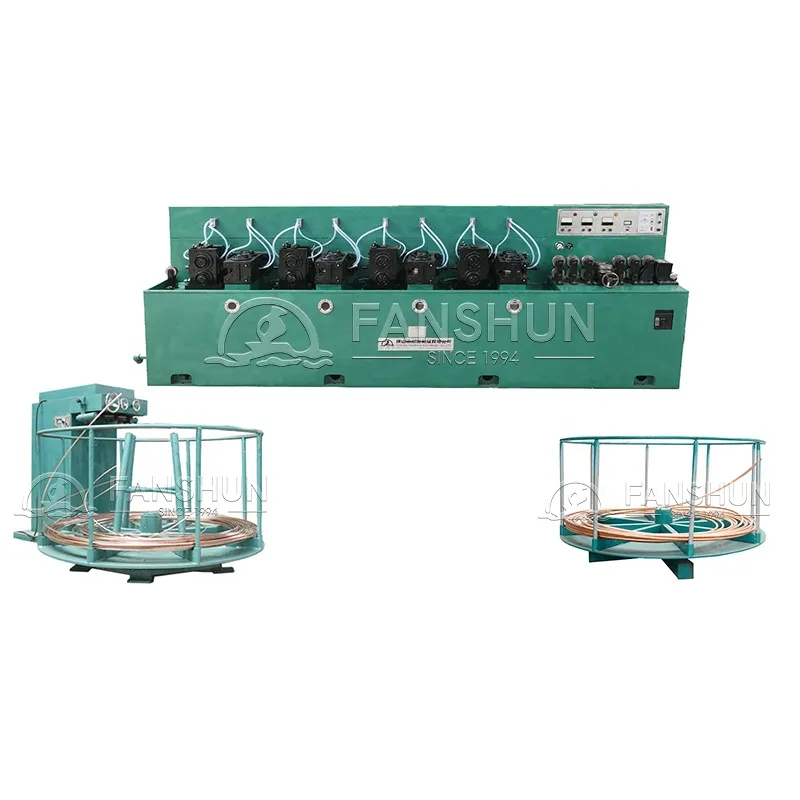
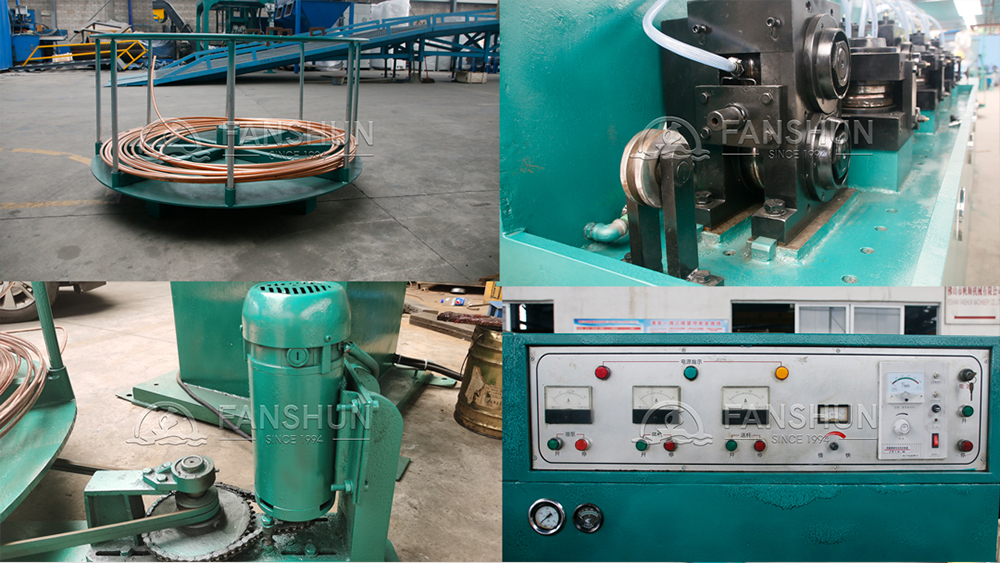
What production problems does the cold‑rolling mill actually solve in the upward‑casting copper rod production line?
The upward casting copper rod production line is the core mainstream equipment for producing high-purity oxygen-free copper rods in the non-ferrous metal processing industry, renowned for its low energy consumption, stable casting performance, and simple production workflow. However, the traditional upward-cast copper rod produced by a standalone upward casting copper rod production line inevitably suffers from inherent casting defects, unstable dimensional accuracy, uneven internal grain structure, and poor surface flatness, which severely restrict the quality and yield of finished copper rods. In modern standardized copper processing factories, the cold rolling mill has become an indispensable core supporting device for the upward casting copper rod production line. A professional copper rod cold rolling mill and high-precision copper rod rolling mill can perfectly make up for the technical shortcomings of pure casting production, solving multiple common production bottlenecks that plague copper rod processing enterprises. Many plant owners are confused about how to select a suitable copper rod cold rolling mill and copper rod rolling mill to match their upward casting copper rod production line. This article will deeply analyze the key production problems solved by the cold rolling mill in the upward casting copper rod production line, and elaborate on the unique application value of the copper rod cold rolling mill and copper rod rolling mill in optimizing upward-cast copper rod quality and stabilizing production efficiency. Choosing a reliable copper rod cold rolling mill and copper rod rolling mill is the first step to maximize the performance of your upward casting copper rod production line.
First and foremost, the most prominent problem solved by the cold rolling mill in the upward casting copper rod production line is the unstable dimensional tolerance of upward-cast copper rod. In the pure casting link of the upward casting copper rod production line, affected by molten copper temperature fluctuation, crystallizer cooling deviation, and traction speed difference, the diameter of upward-cast copper rod often has random errors, resulting in uneven rod thickness and unqualified roundness. Without the intervention of a copper rod cold rolling mill, the dimensional deviation of upward-cast copper rod will exceed the industry standard, leading to waste products in subsequent wire drawing and finishing processes. The professional copper rod rolling mill configured for the upward casting copper rod production line adopts precise roller gap calibration and constant-pressure rolling technology. The copper rod cold rolling mill is carefully calibrated before operation to guarantee stable rolling force. The cold rolling mill performs uniform room-temperature compression deformation on the initially formed upward-cast copper rod, accurately correcting diameter errors and roundness deviations. After being processed by the cold rolling mill, all upward-cast copper rod produced by the upward casting copper rod production line can maintain ultra-high dimensional consistency, completely solving the dimensional instability problem that has long troubled traditional casting production. Every standardized copper rod cold rolling mill is professionally optimized for the dimensional characteristics of upward-cast copper rod, enabling the copper rod rolling mill to achieve precise size control without damaging the internal structure of the copper rod. A well-tuned copper rod rolling mill works hand in hand with the copper rod cold rolling mill to keep size tolerance within tight limits for upward-cast copper rod.
Secondly, the cold rolling mill thoroughly solves the problem of loose internal structure and low compactness of upward-cast copper rod produced by the upward casting copper rod production line. In the natural casting process of the upward casting copper rod production line, molten copper solidifies rapidly, and tiny pores, gaps, and loose grain structures are easily formed inside the upward-cast copper rod. These internal defects cannot be eliminated by the casting process itself, which will directly reduce the electrical conductivity, tensile strength, and fatigue resistance of the upward-cast copper rod, making it unable to meet the production standards of high-end wires and cables. As special precision equipment for copper rod processing, the copper rod cold rolling mill uses multi-pass continuous cold pressing technology to squeeze and refine the internal grains of upward-cast copper rod. The copper rod cold rolling mill can set different rolling passes according to raw material status. The cold rolling mill applies uniform three-dimensional pressure to the copper rod, completely compacting internal tiny pores and gaps, and rearranging the disordered grains of upward-cast copper rod to form a dense and uniform metal structure. The optimized rolling mechanism of the copper rod rolling mill ensures that each rolling pass can stably optimize the internal structure of upward-cast copper rod. Operators need to monitor the working status of the copper rod rolling mill and copper rod cold rolling mill during continuous operation. After rolling by the cold rolling mill, the internal compactness of upward-cast copper rod from the upward casting copper rod production line is greatly improved, and the mechanical and electrical properties are comprehensively upgraded, laying a solid foundation for subsequent deep processing. The copper rod cold rolling mill and copper rod rolling mill together improve the internal metallurgical structure of upward-cast copper rod.
Thirdly, the cold rolling mill effectively solves the problem of poor surface quality of upward-cast copper rod in the upward casting copper rod production line. During continuous casting of the upward casting copper rod production line, the surface of upward-cast copper rod is prone to casting burrs, oxidation spots, scratches, and uneven oxide layers due to mold friction, air oxidation, and molten copper impurity precipitation. These surface defects not only affect the appearance of the copper rod but also cause wire breakage and tool wear in the subsequent wire drawing process, seriously reducing the production yield of the entire production line. The specially designed rolling rollers of the copper rod cold rolling mill have high smoothness and wear resistance. The roller material of the copper rod cold rolling mill is customized for copper material processing. When the cold rolling mill processes upward-cast copper rod, it can uniformly polish and level the rod surface while reducing the copper rod diameter. The precise rolling pressure of the copper rod rolling mill removes surface burrs and protruding defects of upward-cast copper rod, and uniformly compacts the surface oxide layer, forming a smooth, flat, and defect-free high-quality copper rod surface. The copper rod rolling mill and copper rod cold rolling mill are equipped with roller cleaning systems to maintain surface finish. For the upward casting copper rod production line, equipping with a high-quality cold rolling mill completely solves the surface defect problem of original cast rods, greatly improving the surface finish and commercial value of upward-cast copper rod. Without a high-grade copper rod cold rolling mill, surface defects of upward-cast copper rod cannot be fully eliminated.
Fourthly, the cold rolling mill solves the core pain point of high breakage rate of upward-cast copper rod during deep processing. The unprocessed upward-cast copper rod from the upward casting copper rod production line has uneven internal stress and unstable mechanical properties. In the high-speed wire drawing process, stress concentration is prone to occur, resulting in frequent copper rod breakage, intermittent production shutdowns, and serious waste of raw materials and labor costs. The copper rod cold rolling mill realizes uniform stress release and structural homogenization of upward-cast copper rod through multi-stage gradual cold rolling. The control system of the copper rod cold rolling mill can adjust rolling force dynamically. The cold rolling mill eliminates the internal residual stress generated during the casting process of the upward casting copper rod production line, making the tensile strength, elongation, and flexibility of each section of upward-cast copper rod consistent. The stable rolling process of the copper rod rolling mill ensures that the processed upward-cast copper rod has excellent ductility and processing adaptability. The copper rod rolling mill works synchronously with the copper rod cold rolling mill to homogenize material stress. After being treated by the cold rolling mill, the breakage rate of upward-cast copper rod in wire drawing, twisting, and other subsequent processes is reduced by more than 90%, which greatly improves the continuous production capacity of the entire upward casting copper rod production line and effectively reduces the production loss rate of enterprises. Many factories report obvious reduction in copper rod breakage after upgrading their copper rod cold rolling mill and copper rod rolling mill.
In addition, the cold rolling mill solves the problem of low production flexibility and single product specification of the traditional upward casting copper rod production line. A single upward casting copper rod production line can only produce fixed-specification upward-cast copper rod, and it is difficult to adapt to the diversified market demand for copper rod specifications, resulting in low production flexibility and poor market competitiveness of enterprises. The modular adjustable design of the copper rod cold rolling mill enables the cold rolling mill to flexibly adjust the rolling gap and rolling pressure. The copper rod cold rolling mill supports quick parameter switching for different copper rod sizes. According to market demand, the copper rod rolling mill can process upward-cast copper rod of fixed casting specifications into various finished copper rods of different diameters. The copper rod rolling mill’s adjustable roller gap cooperates perfectly with the copper rod cold rolling mill. For the upward casting copper rod production line, the supporting cold rolling mill realizes one-line multi-specification production, breaking the specification limitation of pure casting production. The efficient adjustment performance of the copper rod cold rolling mill makes the production of upward-cast copper rod more flexible, helping processing enterprises quickly respond to market order changes and improve production efficiency and economic benefits. A flexible copper rod cold rolling mill and copper rod rolling mill help factories expand product ranges without rebuilding the upward casting copper rod production line.
Moreover, the cold rolling mill solves the problems of low yield and high impurity rate of upward-cast copper rod in the upward casting copper rod production line. Traditional pure casting production will produce a large number of unqualified copper rods due to dimensional errors, surface defects, and internal structural problems, resulting in a low finished product yield of the upward casting copper rod production line and increased raw material loss. The copper rod cold rolling mill has a powerful defect repair and optimization function. The copper rod cold rolling mill can handle minor casting defects from the casting stage. The cold rolling mill can repair most minor casting defects of upward-cast copper rod through physical rolling deformation, turning originally unqualified blanks into high-quality finished products. The precise rolling control system of the copper rod rolling mill can screen and optimize the copper rod structure, reduce the proportion of defective products, and maximize the utilization rate of copper raw materials. The copper rod rolling mill and copper rod cold rolling mill together raise the finished rate of upward-cast copper rod. After adding the cold rolling mill to the upward casting copper rod production line, the finished product yield of upward-cast copper rod is significantly increased, the production cost per ton of copper rod is effectively reduced, and the overall production efficiency and economic benefits of the production line are comprehensively improved. Investing in a high-performance copper rod cold rolling mill and copper rod rolling mill brings fast ROI for copper rod manufacturers.
In summary, the cold rolling mill is a key core device that determines the final product quality and production efficiency of the upward casting copper rod production line. The professional copper rod cold rolling mill and high-precision copper rod rolling mill perfectly solve a series of stubborn production problems of the upward casting copper rod production line, including unstable dimensional accuracy, poor surface quality, loose internal structure, high deep-processing breakage rate, single production specification, and low finished product yield. For all copper processing enterprises that deploy upward casting copper rod production line, configuring a high-performance cold rolling mill is not only a key measure to optimize upward-cast copper rod quality but also an essential way to reduce production costs, improve market competitiveness, and realize standardized and high-efficiency production of copper rods. Factory managers must choose a matched copper rod cold rolling mill and copper rod rolling mill to fit their upward casting copper rod production line. With the continuous upgrading of the non-ferrous metal processing industry, the intelligent and high-precision copper rod cold rolling mill and copper rod rolling mill will become the standard configuration of high-end upward casting copper rod production line, helping more enterprises produce ultra-high-quality upward-cast copper rod that meets international industry standards.