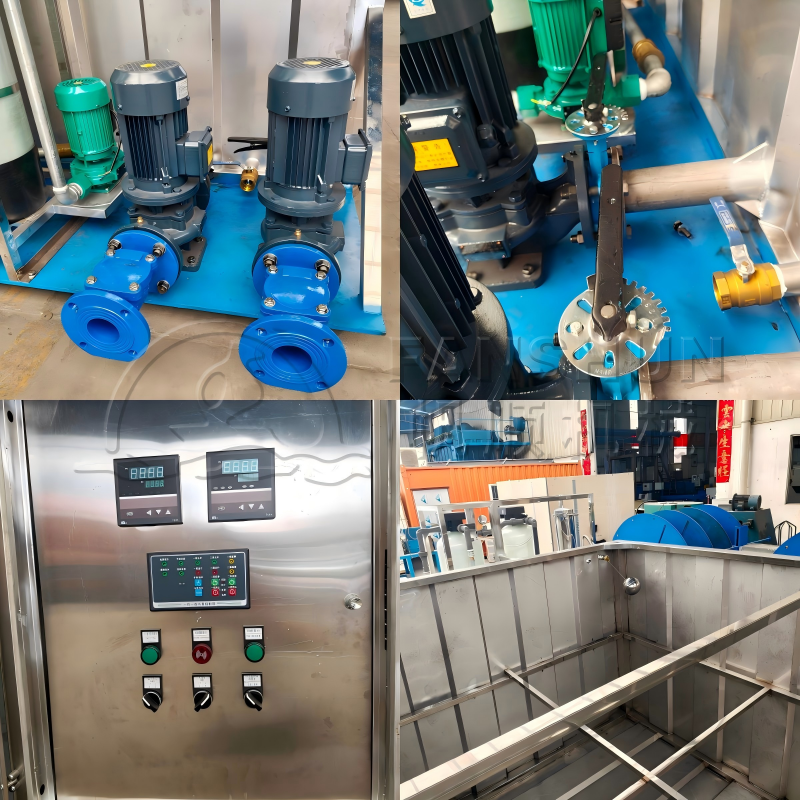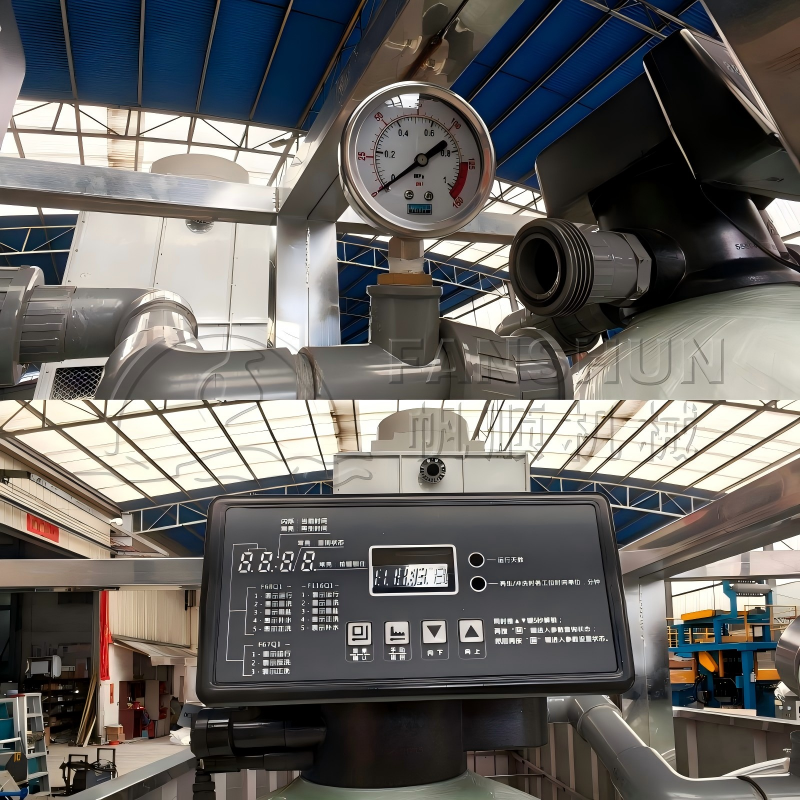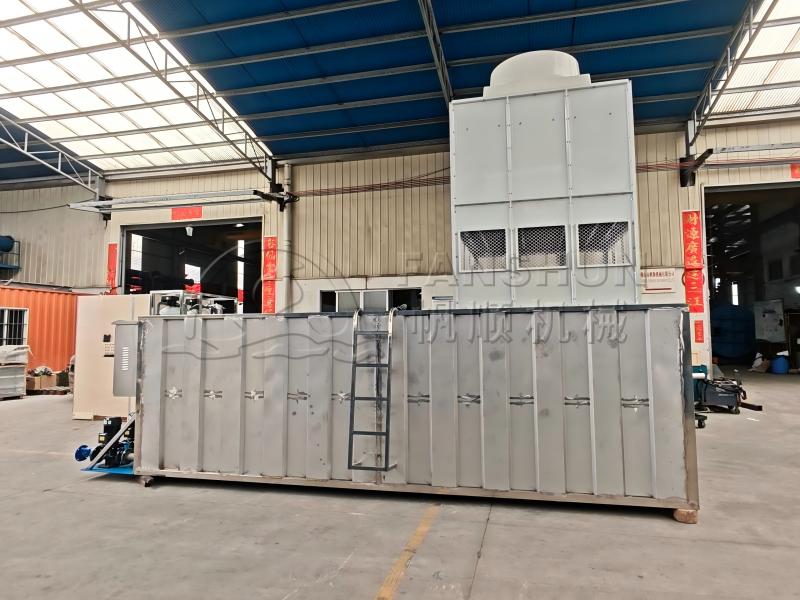
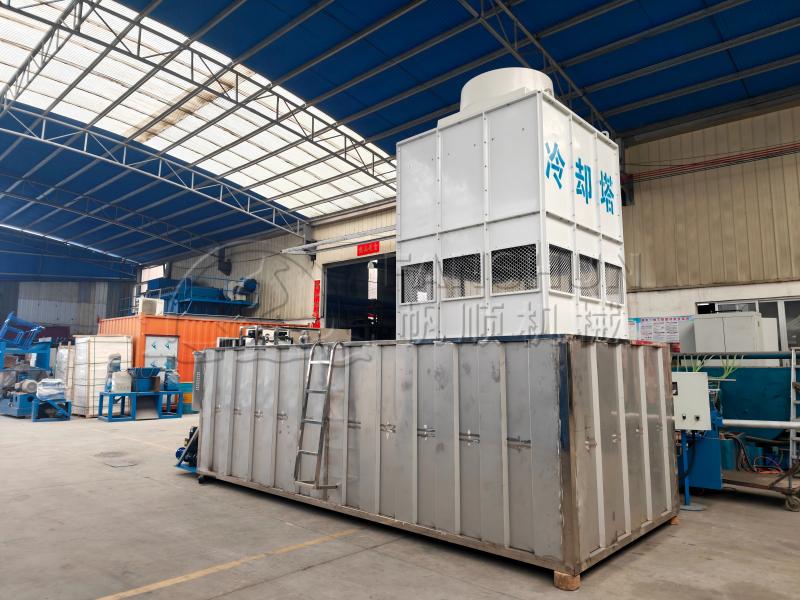
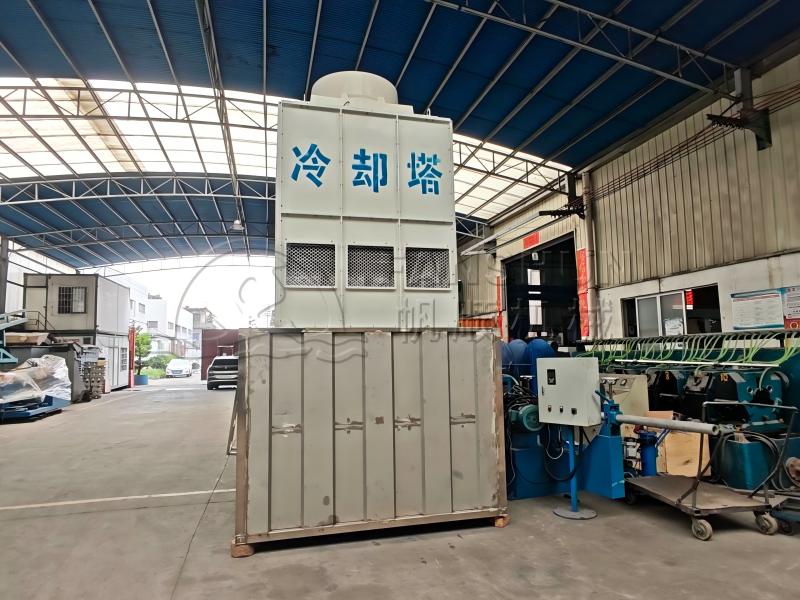
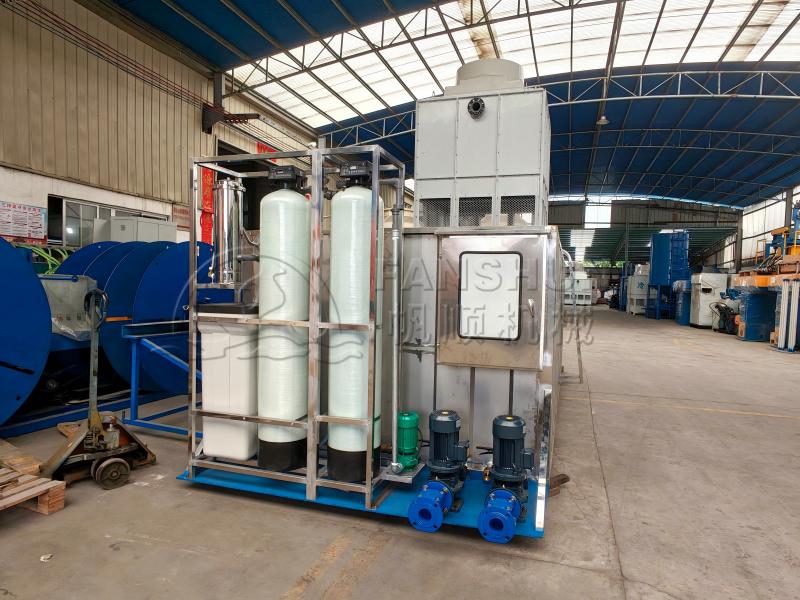
The Industrial Cooling System with Soft Water Treatment is an integrated system combining water softening, circulating cooling, heat exchange, filtration, temperature control, and water quality management.
It is mainly designed to provide continuous and reliable cooling water for industrial equipment such as melting furnaces, continuous casting machines, induction coils, crystallizers, furnace bodies, hydraulic equipment, and other heat-generating equipment.
The system uses softened or treated water as the cooling medium. A circulation pump delivers the cooling water to the equipment, where it absorbs heat. The heated water then passes through a heat exchanger or cooling unit to reduce its temperature before returning to the circulation system.
The soft water treatment process reduces the effects of calcium and magnesium ions in the water, helping to minimize scale formation inside heat exchangers, pipelines, and cooling equipment. Combined with filtration and water quality monitoring, the system helps improve operational stability and extend equipment service life.
The system is equipped with a water softening unit to reduce water hardness and the concentration of calcium and magnesium ions, helping to minimize scale formation in pipelines, heat exchangers, and the internal cooling passages of equipment.
The cooling water is continuously circulated within the system. Only a small amount of make-up water is normally required, helping to reduce water consumption and operating costs.
The system can be equipped with heat exchangers, cooling units, circulation pumps, and temperature control devices according to the cooling requirements of the customer's equipment, ensuring stable cooling water temperature during operation.
Filtration devices can be installed to remove impurities, particles, and suspended solids from the circulating water, helping to reduce blockage and contamination in pipelines and heat exchangers.
According to customer requirements, the system can be equipped with a PLC control cabinet, temperature sensors, pressure sensors, flow meters, liquid-level sensors, and alarm functions for automatic operation and monitoring.
The system can be customized according to the customer's production schedule and cooling requirements, making it suitable for long-term and continuous industrial operation.
The complete cooling system is designed according to the customer's specific requirements, including the number and type of equipment to be cooled, cooling load, inlet and outlet water temperatures, circulating water flow rate, available installation space, and power supply conditions.
| Item | Technical Parameter |
|---|---|
| Equipment Name | Industrial Circulating Cooling System |
| Cooling Method | Closed-loop circulation / heat exchange cooling |
| Water Treatment | Soft water treatment |
| Cooling Medium | Softened water / demineralized water / process cooling water |
| Circulating Water Flow | Customized according to cooling requirements |
| Cooling Capacity | Customized according to actual heat load |
| Inlet Water Temperature | Customized according to process requirements |
| Outlet Water Temperature | Customized according to process requirements |
| Water Pump | Industrial circulating water pump; standby pump available |
| Heat Exchanger | Plate / shell-and-tube type or other suitable type |
| Filtration System | Y-type filter / precision filter or equivalent |
| Water Softener | Automatic water softening unit |
| Control Mode | Automatic / Manual |
| Control System | PLC + HMI |
| Monitoring | Temperature, pressure, flow, liquid level, etc. |
| Alarm Functions | High temperature, low flow, low water level, pump failure, etc. |
| Power Supply | 380V / 415V / 440V, 3Ph, 50/60Hz, customizable |
| Installation | Skid-mounted / split type |
| Cooling Capacity | Calculated according to the customer's actual heat load |
Note: The above parameters are for reference only. Final technical specifications will be determined according to the customer's equipment, actual cooling load, water quality, ambient temperature, and site layout.
For equipment with higher cooling-water quality requirements, such as induction furnaces and induction coils, the system can be configured with additional water quality monitoring and treatment according to the actual operating conditions.
The Industrial Cooling System with Soft Water Treatment can be widely used for industrial equipment requiring stable circulating cooling water, including:
Medium-frequency induction melting furnaces
Industrial-frequency melting furnaces
Electric arc furnaces and submerged arc furnace auxiliary cooling systems
Copper, aluminum, zinc, and brass melting equipment
Copper rod continuous casting machines
Copper tube and copper bar continuous casting machines
Horizontal brass continuous casting machines
Aluminum alloy casting equipment
Copper anode plate casting machines
Ferrochrome ingot casting machines
The equipment is provided with a 12-month warranty.
Under normal operating and maintenance conditions, if equipment failure is caused by manufacturing or installation quality issues, we will provide technical support, repair services, or relevant spare parts according to the specific situation.
Consumables, wearing parts, and damage caused by improper operation, unsuitable water quality, unauthorized modification, or force majeure are not covered by the standard warranty.
Regular inspection of the circulating water is recommended, including:
pH value
Electrical conductivity
Water hardness
Water temperature
Water tank level
Circulating water flow rate
Filter differential pressure
Although a closed-loop cooling system requires relatively little make-up water, regular water quality monitoring is still recommended to help prevent corrosion, scaling, and accumulation of contaminants.
The water softening system should be inspected and maintained regularly according to the raw water hardness and actual operating conditions. Regeneration and salt replenishment should be carried out when necessary to ensure stable water-softening performance.
Filters should be inspected and cleaned regularly. If the differential pressure across the filter increases or the circulating water flow decreases, the filter element should be cleaned or replaced in time.
Regularly check the operating condition, pressure, flow rate, and sealing condition of the circulation pump. A standby pump can be provided with automatic changeover to improve system reliability and ensure continuous operation.
Regularly monitor the inlet and outlet water temperatures and pressure differential of the heat exchanger. If heat-transfer efficiency decreases or the pressure differential increases significantly, the heat exchanger should be inspected and cleaned to prevent scale or impurities from affecting cooling performance.