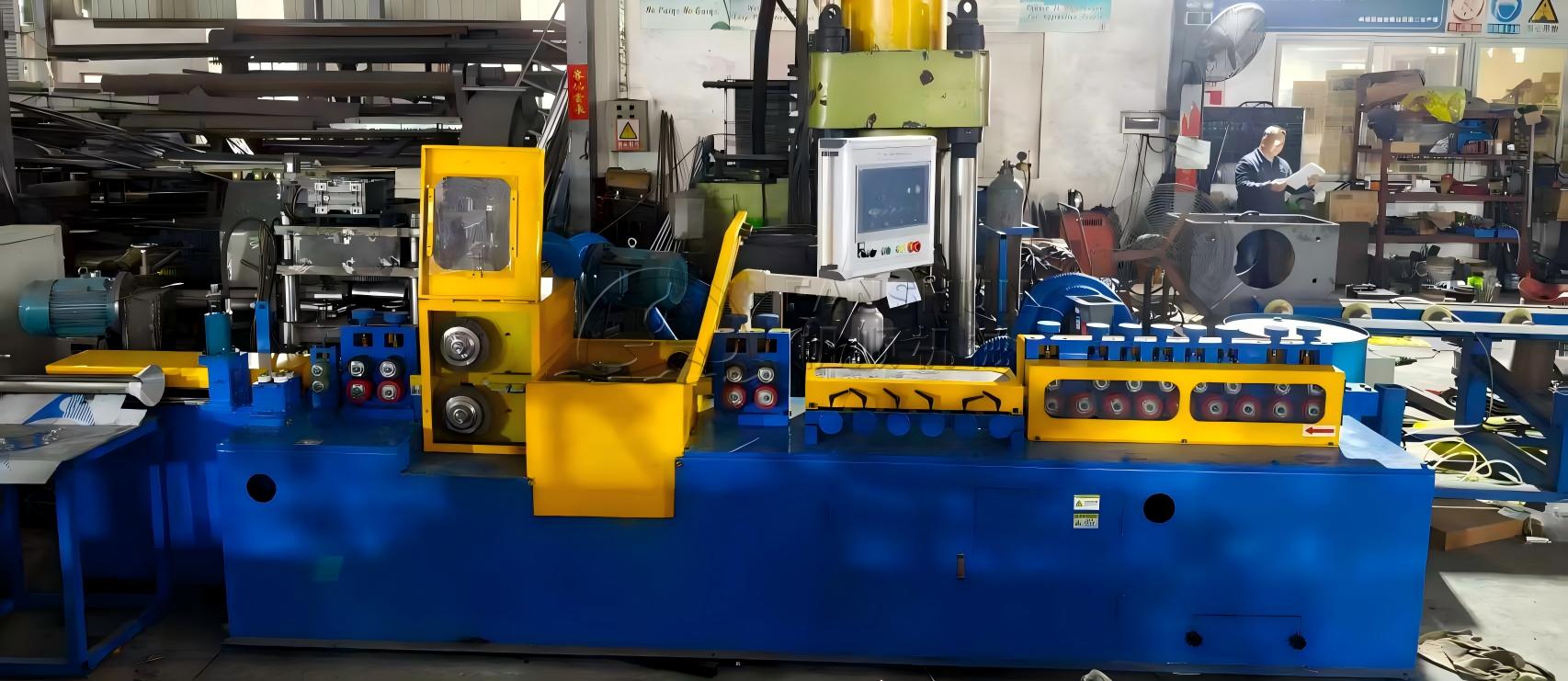
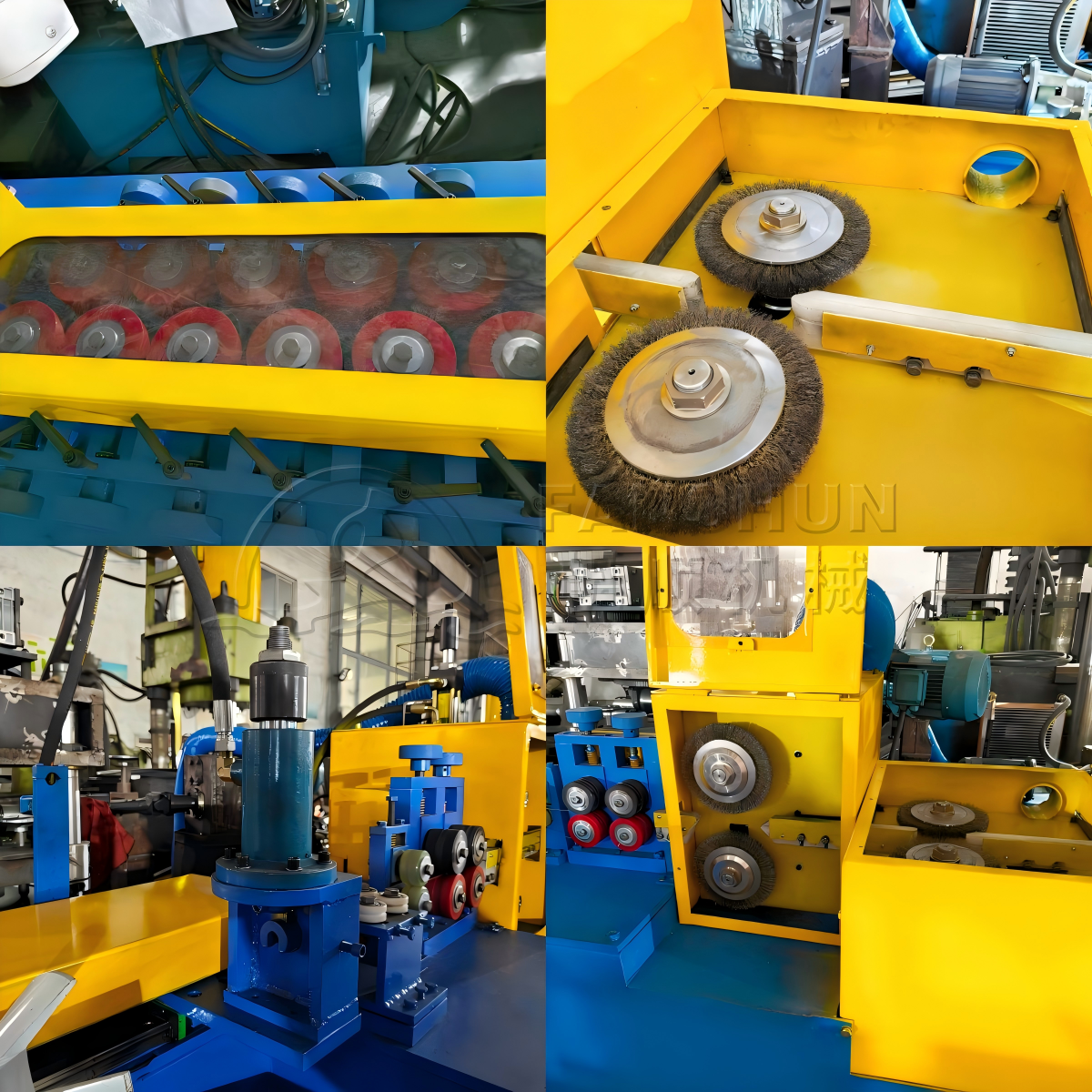
Why can the straightening, grinding and shearing machine achieve vertical-horizontal dual-station synchronous grinding? Where is the breakthrough?
In modern metal processing industries, efficiency, precision, and integration have become the core direction of equipment innovation. Recently, a new generation of processing systems centered on the Straightening, grinding and shearing machine has attracted widespread attention. The most notable technological highlight is its ability to realize vertical-horizontal dual-station synchronous grinding, a breakthrough that significantly changes the traditional single-station, step-by-step processing mode.
At the center of this innovation ecosystem are several highly integrated solutions, including the Insulated Copper Flat Wire Straightening and Cutting Machine, the Copper Flat Wire Straightening, Polishing, and Shearing Machine, the Multi-functional Copper Flat Bar Processing Equipment, and the Copper Busbar Straightening and Grinding Machine. These systems collectively represent a shift toward intelligent, continuous, and synchronized metal processing.
The core question: how does dual-station synchronous grinding become possible?
Traditional processing equipment typically relies on a single working station. This means straightening, grinding, and shearing must be completed in separate steps, resulting in downtime between processes and reduced efficiency. However, the new generation of Straightening, grinding and shearing machine systems introduces a structural redesign that enables two independent but coordinated working stations: vertical and horizontal.
The breakthrough lies in three key engineering innovations:
First, a dual-drive synchronized control system ensures both stations operate in perfect timing alignment. While one station performs straightening, the other can simultaneously conduct grinding or shearing without interference.
Second, a modular mechanical structure allows independent load distribution. This prevents vibration coupling between vertical and horizontal units, maintaining machining accuracy even during high-speed operation.
Third, an adaptive feeding and positioning system dynamically adjusts material flow, enabling continuous processing of copper flat wires and busbars without stopping the production line.
These innovations collectively explain why the Straightening, grinding and shearing machine can achieve true synchronous multi-station operation.
Application expansion in copper processing industry
The demand for high-efficiency copper processing has driven rapid adoption of integrated machinery. Among them, the Insulated Copper Flat Wire Straightening and Cutting Machine plays a key role in electrical manufacturing industries, where precision cutting and insulation integrity are critical.
Similarly, the Copper Flat Wire Straightening, Polishing, and Shearing Machine integrates surface finishing and structural correction in a single continuous process, reducing manual intervention and improving consistency.
The Multi-functional Copper Flat Bar Processing Equipment expands functionality further by combining straightening, flattening, polishing, and shearing into a unified platform. This reduces equipment footprint while increasing output capacity.
In heavy-duty electrical applications, the Copper Busbar Straightening and Grinding Machine is particularly important. Busbars require extremely high surface smoothness and dimensional accuracy, and the integrated grinding mechanism ensures stable performance under continuous load conditions.
All of these systems are built upon the same technological foundation: synchronized multi-station processing enabled by the Straightening, grinding and shearing machine architecture.
Structural breakthrough: vertical-horizontal dual-station system
The most significant innovation is the vertical-horizontal hybrid structure. Traditional machines operate on a single-plane layout, limiting processing flexibility. In contrast, the new system separates working zones into vertical and horizontal modules.
This design allows:
Simultaneous processing of different stages
Independent control of grinding pressure and direction
Reduced mechanical interference between operations
Continuous material throughput without stoppage
For example, while the vertical station handles straightening of copper flat wires, the horizontal station can simultaneously perform grinding or shearing tasks. This parallel processing model significantly increases productivity.
The Copper Flat Wire Straightening, Polishing, and Shearing Machine and the Insulated Copper Flat Wire Straightening and Cutting Machine both benefit directly from this architecture, achieving higher throughput and improved surface quality.
Intelligent control system as the hidden driver
Another major breakthrough lies in software and automation. The modern Straightening, grinding and shearing machine is equipped with an intelligent control system that synchronizes mechanical motion, torque output, and material feeding speed.
Key features include:
Real-time load balancing between dual stations
Automatic error correction in alignment
Adaptive speed regulation based on material thickness
Predictive maintenance alerts to reduce downtime
This allows the Multi-functional Copper Flat Bar Processing Equipment and the Copper Busbar Straightening and Grinding Machine to maintain stable performance even under high-volume production environments.
Industrial impact and efficiency improvement
The introduction of vertical-horizontal dual-station synchronous grinding has significantly changed production efficiency standards. Compared with traditional single-station machines, the new Straightening, grinding and shearing machine systems can increase output efficiency by more than 40% in some applications.
For manufacturers using the Insulated Copper Flat Wire Straightening and Cutting Machine, this means faster delivery cycles and lower labor costs. For those using the Copper Flat Wire Straightening, Polishing, and Shearing Machine, it results in more consistent surface quality and reduced rework rates.
The Multi-functional Copper Flat Bar Processing Equipment further reduces production line complexity, allowing multiple processes to be completed in one integrated machine. Meanwhile, the Copper Busbar Straightening and Grinding Machine ensures high-precision finishing required in power transmission systems.
Future development trends
As industrial automation continues to evolve, the Straightening, grinding and shearing machine will likely move toward even deeper integration. Future developments may include AI-based process optimization, fully automated material handling systems, and cloud-connected production monitoring.
The Insulated Copper Flat Wire Straightening and Cutting Machine, the Copper Flat Wire Straightening, Polishing, and Shearing Machine, the Multi-functional Copper Flat Bar Processing Equipment, and the Copper Busbar Straightening and Grinding Machine will continue to evolve under this unified technological framework.
Conclusion
The ability of the Straightening, grinding and shearing machine to achieve vertical-horizontal dual-station synchronous grinding is not the result of a single innovation, but a combination of mechanical redesign, intelligent control, and system integration.
This breakthrough has redefined the efficiency boundaries of copper processing equipment, including the Insulated Copper Flat Wire Straightening and Cutting Machine, the Copper Flat Wire Straightening, Polishing, and Shearing Machine, the Multi-functional Copper Flat Bar Processing Equipment, and the Copper Busbar Straightening and Grinding Machine.
As manufacturing continues to demand higher speed, precision, and integration, such synchronized processing systems are expected to become the new industry standard.